
Cat and Dog Surgery in Colma, CA
Although we all wish our pets can be healthy throughout their lives without medical care, there are times when cat and dog surgery services are necessary to make them healthy. If your pet is need of surgery, you can count on the expertise of the veterinarians at Colma Animal Hospital. We also have an on-call board-certified surgeon available for complex procedures. Our facility in Colma is equipped with state-of-the-art technology and equipment to allow our doctors to perform virtually any pet surgical procedure, including (but not limited to):
Soft Tissue Surgeries:
Abdominal Exploratory Surgery (involves the following steps):
- Open
- Explore
- Determine the problem
- Repair
- Close
Endocrine System Surgery:
- Adrenal gland surgery (adrenalectomy)
- Pancreatic surgery (biopsy, abscess drainage)
- Thyroid surgery (thyroidectomy)
Gastrointestinal System & Hemolymphatic Surgery:
- Anal sacculectomy
- Colectomy (feline megacolon)
- Enterotomy
- Esophageal feeding tube
- Gastrotomy
- Gastropexy
- Intestinal resection & anastomosis
- Partial splenectomy
- Total splenectomy
Genital System Surgery:
- C-Section
- Castration (neuter)
- Cryptorchid castration (inguinal, abdominal)
- Ovariohysterectomy (spay)
- Pyometra
Head & Neck Surgery:
- Cherry eye surgery
- Ear hematoma repair
- Entropion or ectropion surgery
- Enucleation (eye removal surgery)
- Eyelid tumor surgery
- Lateral ear resection
- Salivary mucocoele
- Total ear canal ablation (TECA)
Hernia Surgery:
- Inguinal hernia
- Perineal hernia repair
- Scrotal hernia
- Umbilical hernia
Oncology Surgery:
- Chemotherapy consultation available
- Fibrosarcoma resection with margin evaluation (feline)
- Major mass removals
- Radiation referral available
Urinary System Surgery:
- Cystotomy (bladder stone removal surgery)
- Nephrectomy (kidney removal surgery)
- Perineal urethrostomy (feline)
- Prescrotal urethrotomy
- Scrotal urethrostomy
Orthopedic Surgeries:
Amputation
- Forelimb
- Hindlimb
- Toe
Anterior Cruciate Ligament Surgery
- TTA (tibial tuberosity advancement)
- TPLO repair (tibial plateau leveling osteotomy)
- Extracapsular stifle stabilization
Fracture Fixation
- External Fixation (IMEX System)
- Internal Fixation (bone plates or intramedullary pins)
Hip Surgery
- FHO (femoral head ostectomy)
- Hip luxation (open surgical reduction and stabilization)
- PENN hip evaluation
- TPO (triple pelvic osteotomy for hip dysplasia)
Medial Patellar Luxation Surgery
- Femoral trochleoplasty
- Lateral retinacular imbrication
- Tibial tuberosity transposition
What to Expect Before and After Surgery
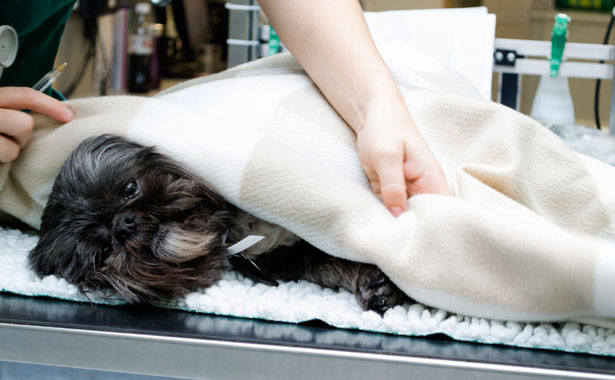
To reduce the risk of vomiting during and after anesthesia, we require that all pets fast 8-10 hours prior to surgery. “No food or drink after midnight” is usually our recommendation. However, a small amount of water is acceptable. Prior to each surgical procedure we perform, we perform a physical exam and administer pre-anesthetic blood work. This allows us to be sure your pet is healthy enough for anesthesia and surgery. Then, we place an IV catheter for easy administration of anesthesia and pain relief medication. Once your pet is relaxed, we administer anesthesia and begin surgery.
We monitor every patient’s vital signs throughout the entire surgical procedure, using advanced ECG and oximetry equipment. For advanced surgeries, we also monitor blood pressure. After the surgery is complete, we provide post-surgical pain relief options, such as laser therapy, and discharge instructions to keep your pet comfortable and promote a speedy recovery.
If you would like to schedule a surgical procedure for your pet, or if you have questions about what to expect before, during, or after surgery, give us a call at (650) 755-0969. One of our team members will be glad to assist you.